
Last updated September 22, 2026
Level 1 sweep and inspection to the NFPA 211 annual standard - flue, crown, cap, and flashing checked and photographed
Chimney sweep logs do not sweep chimneys. They loosen some creosote - which then falls where a brush and vacuum still have to collect it.
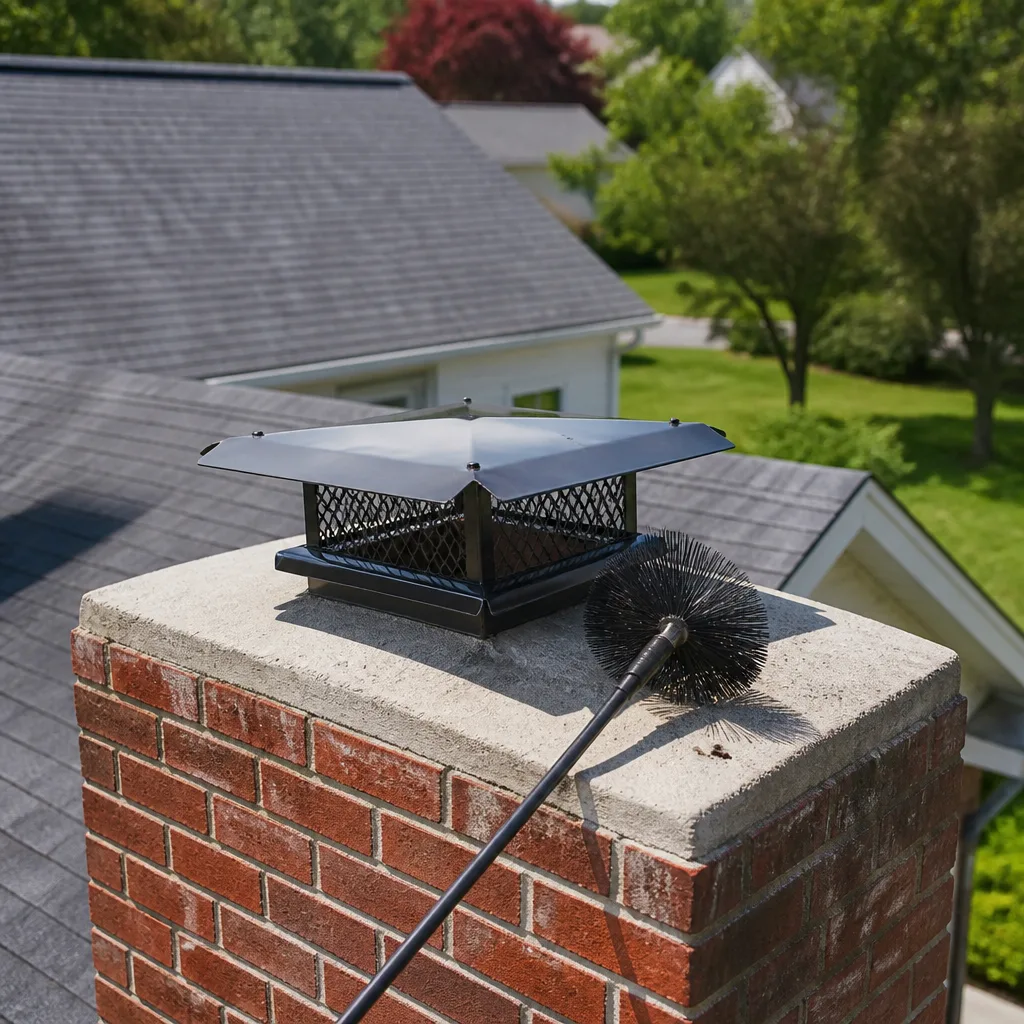
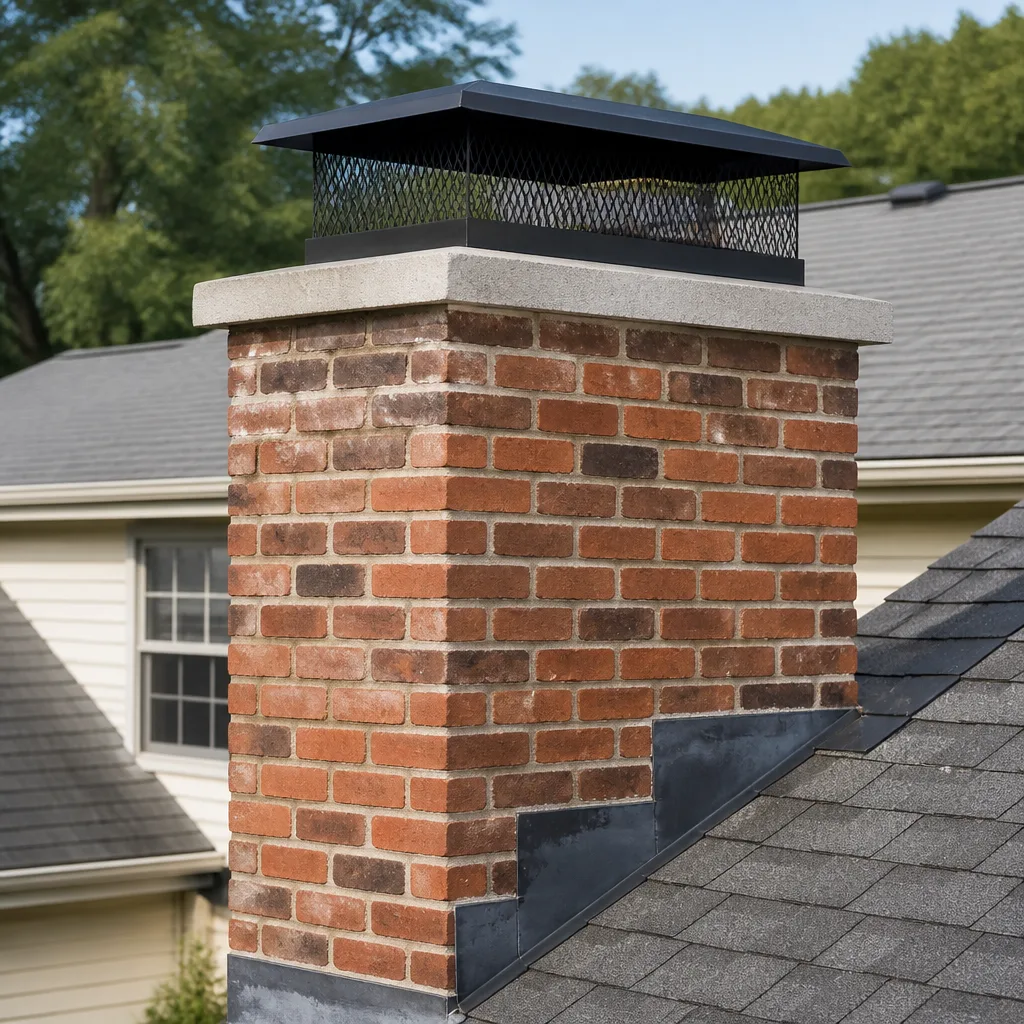
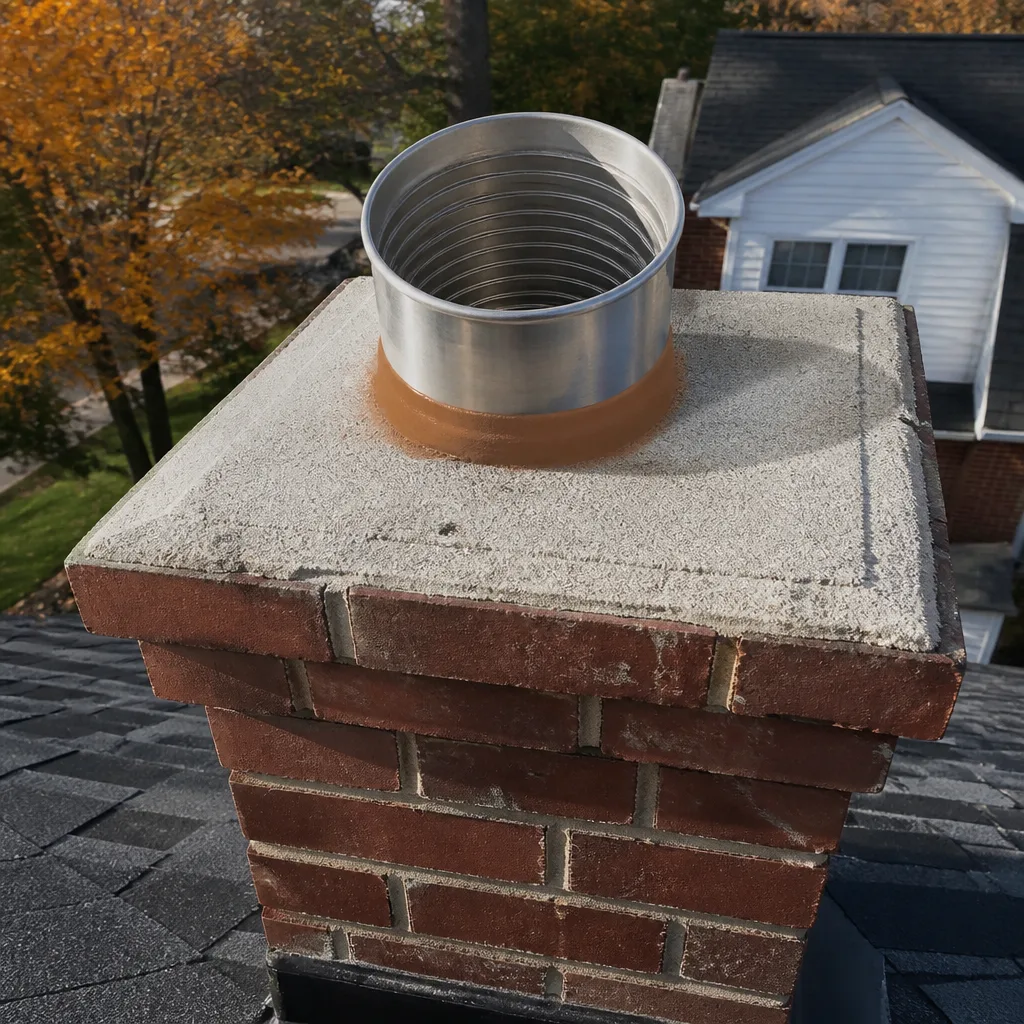
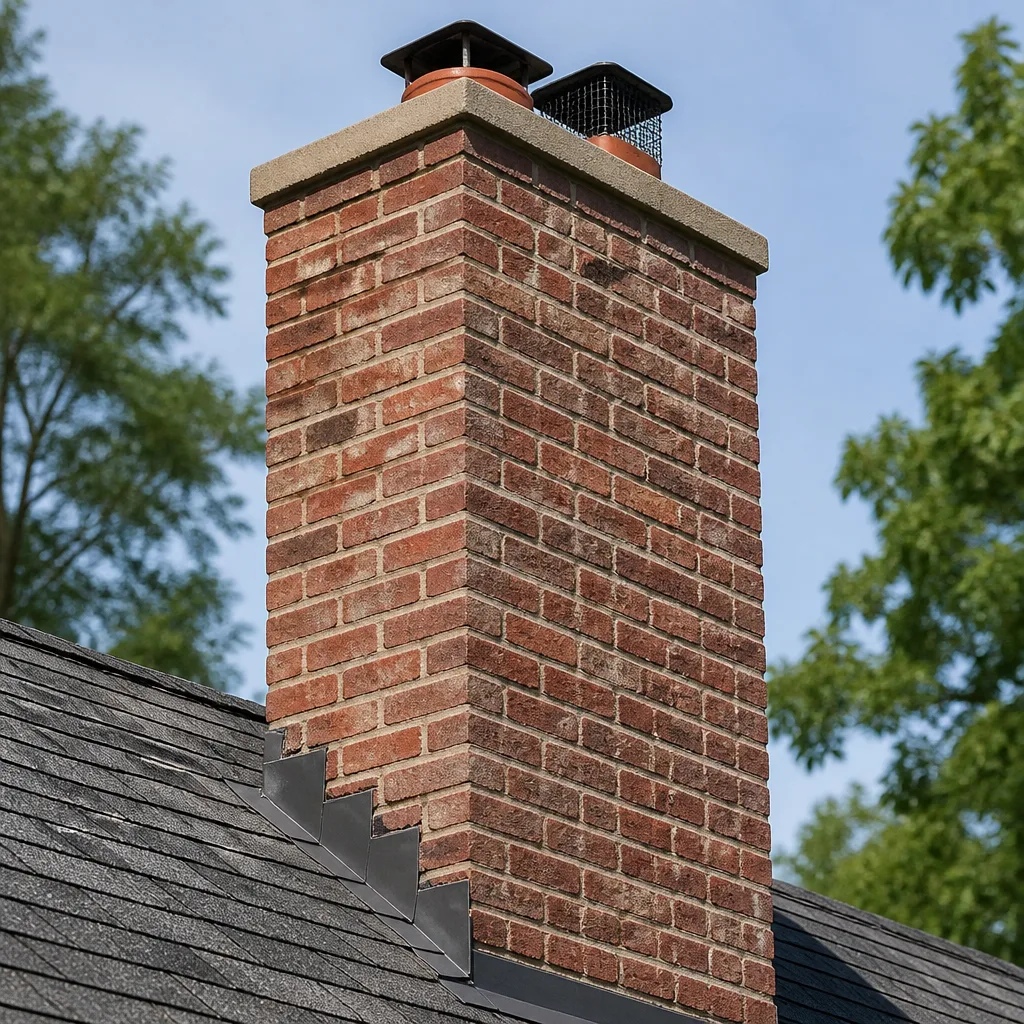
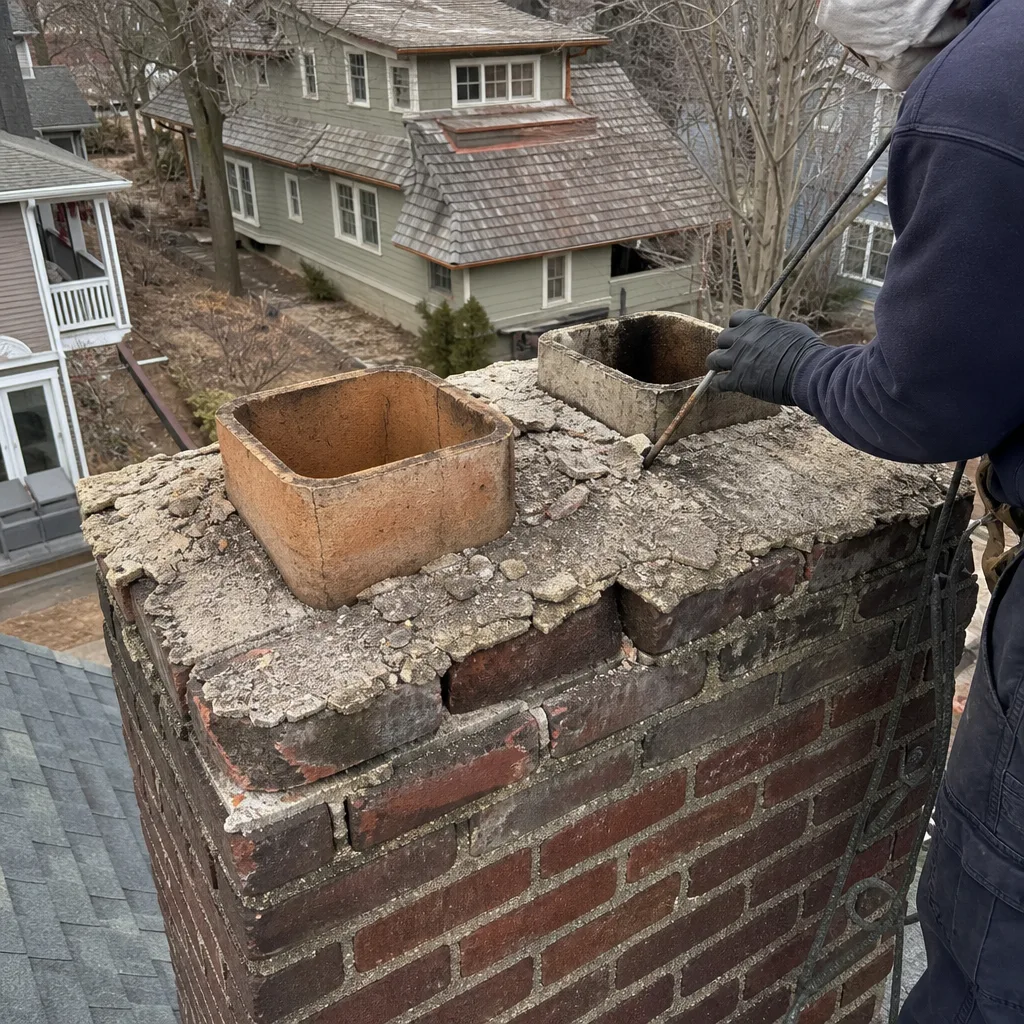 Before
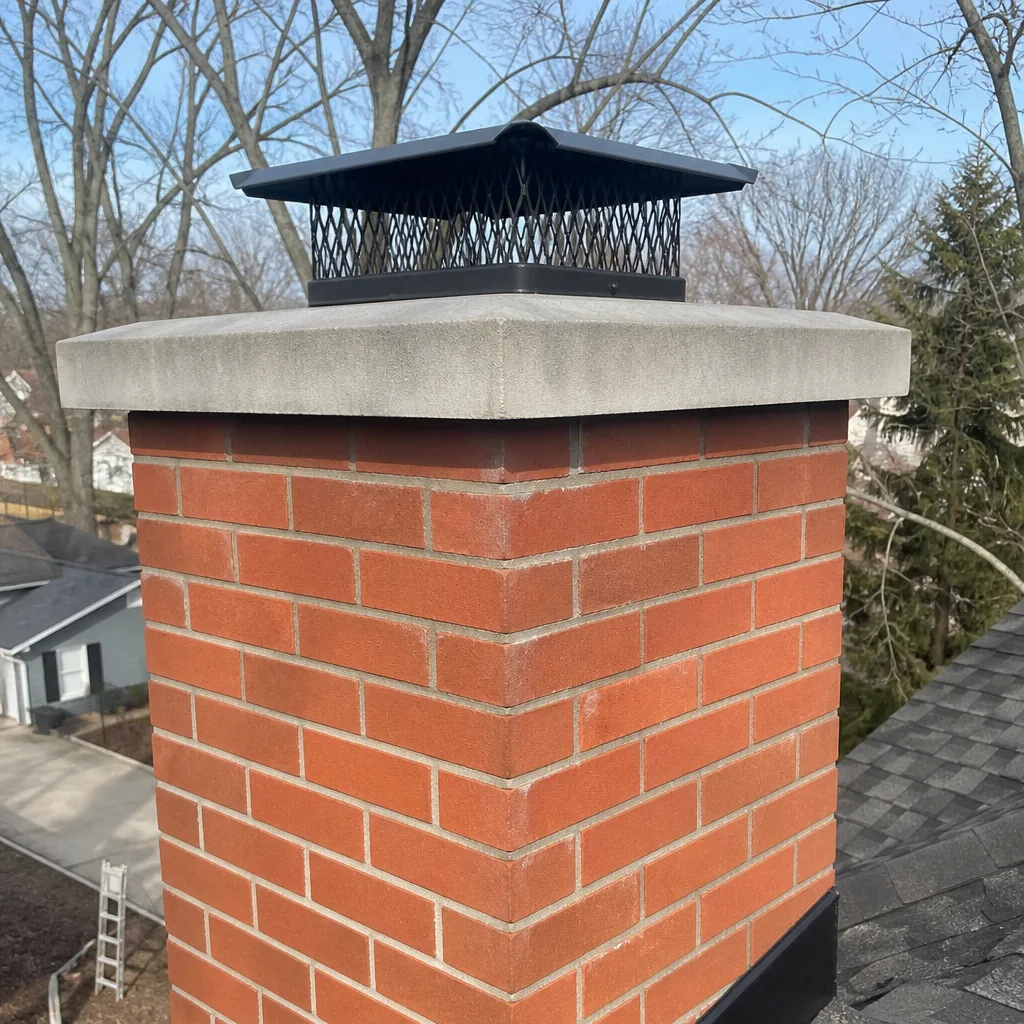 After
After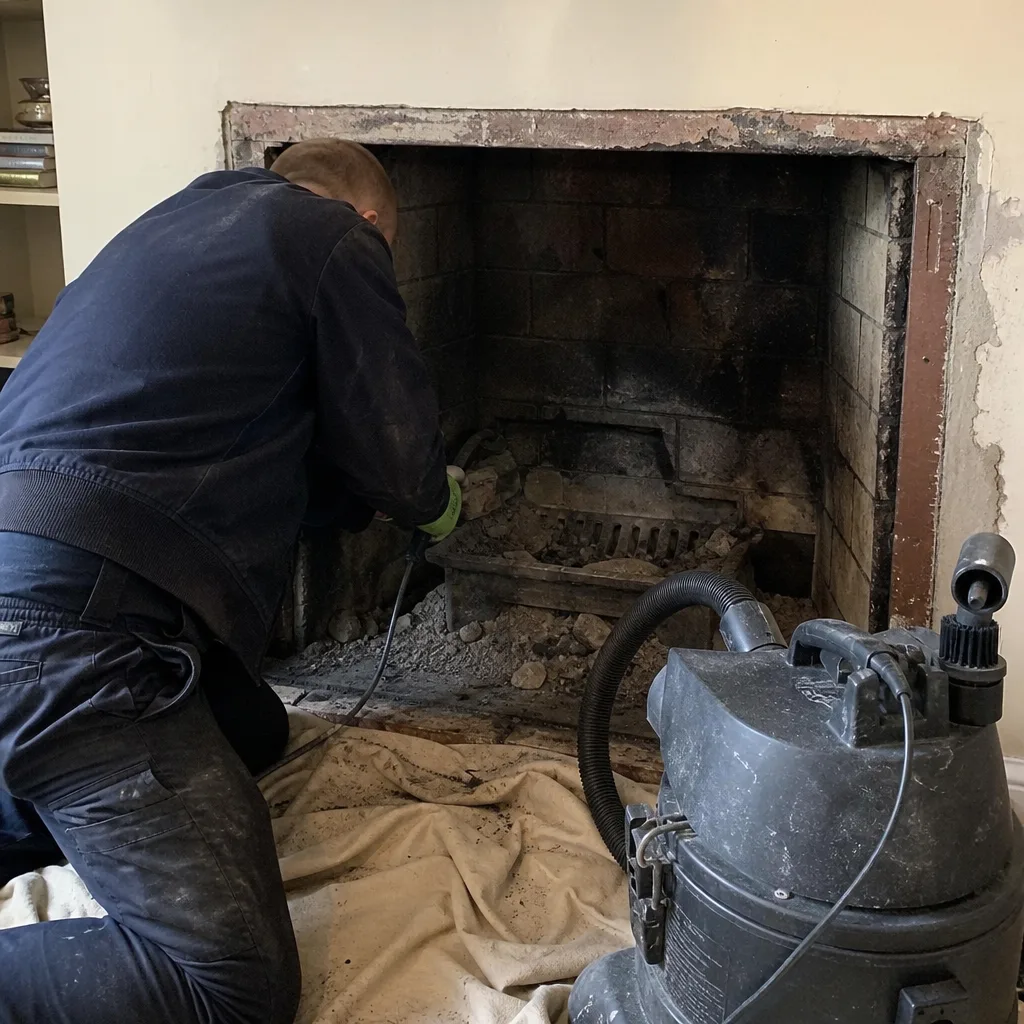 Before
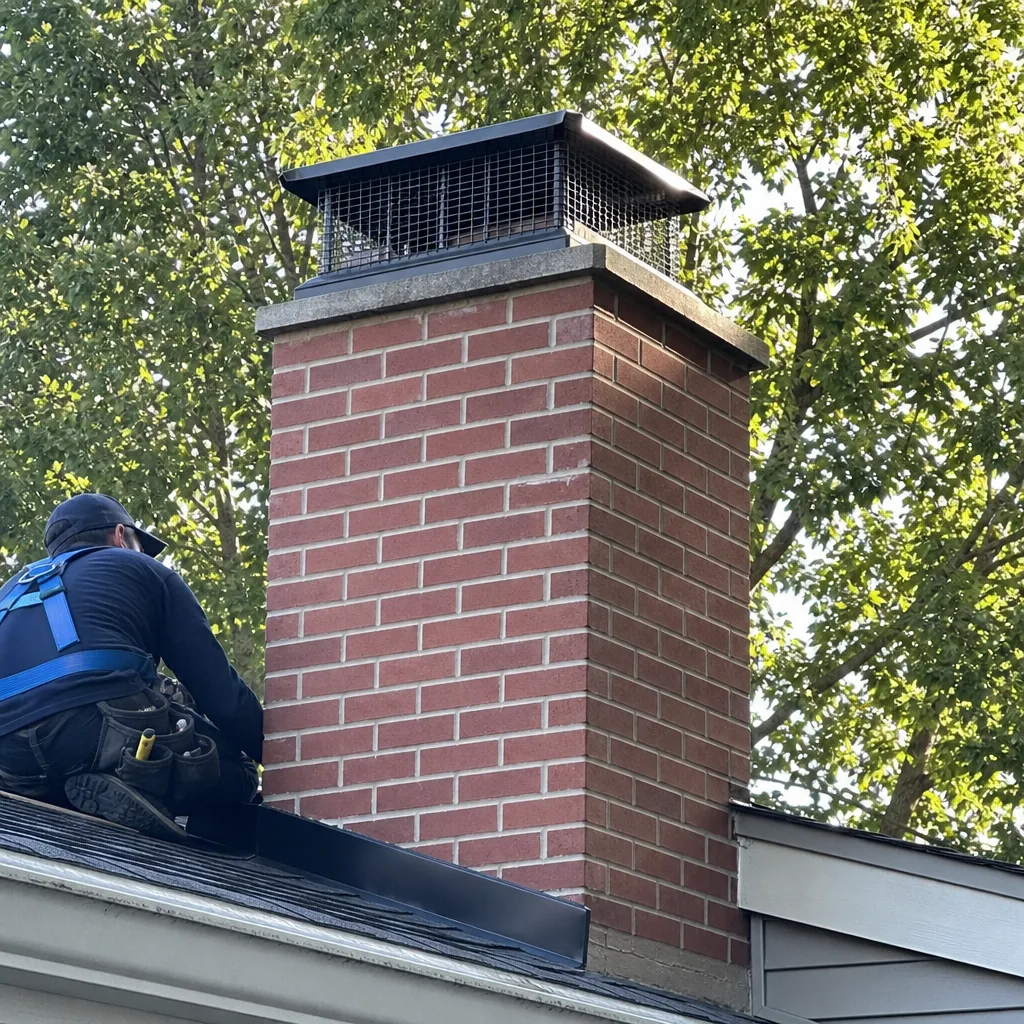 After
After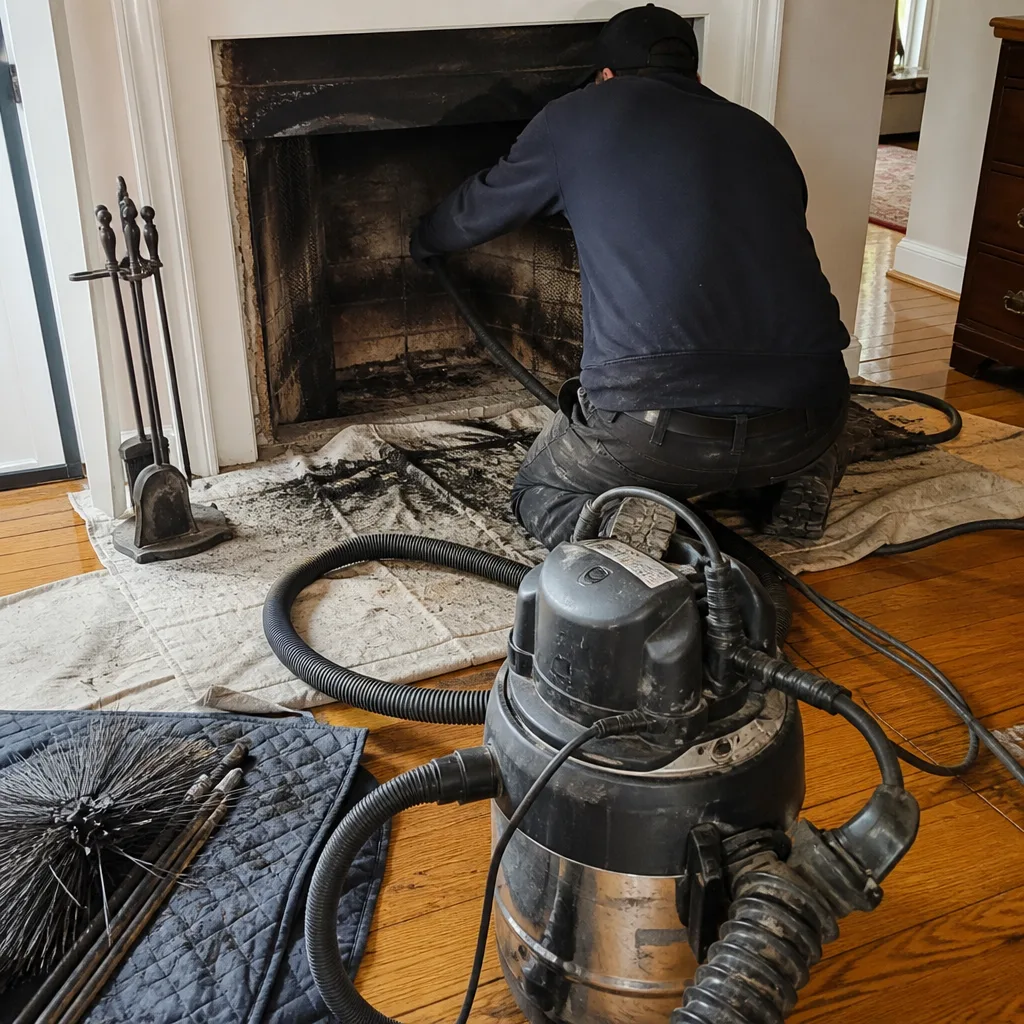 Before
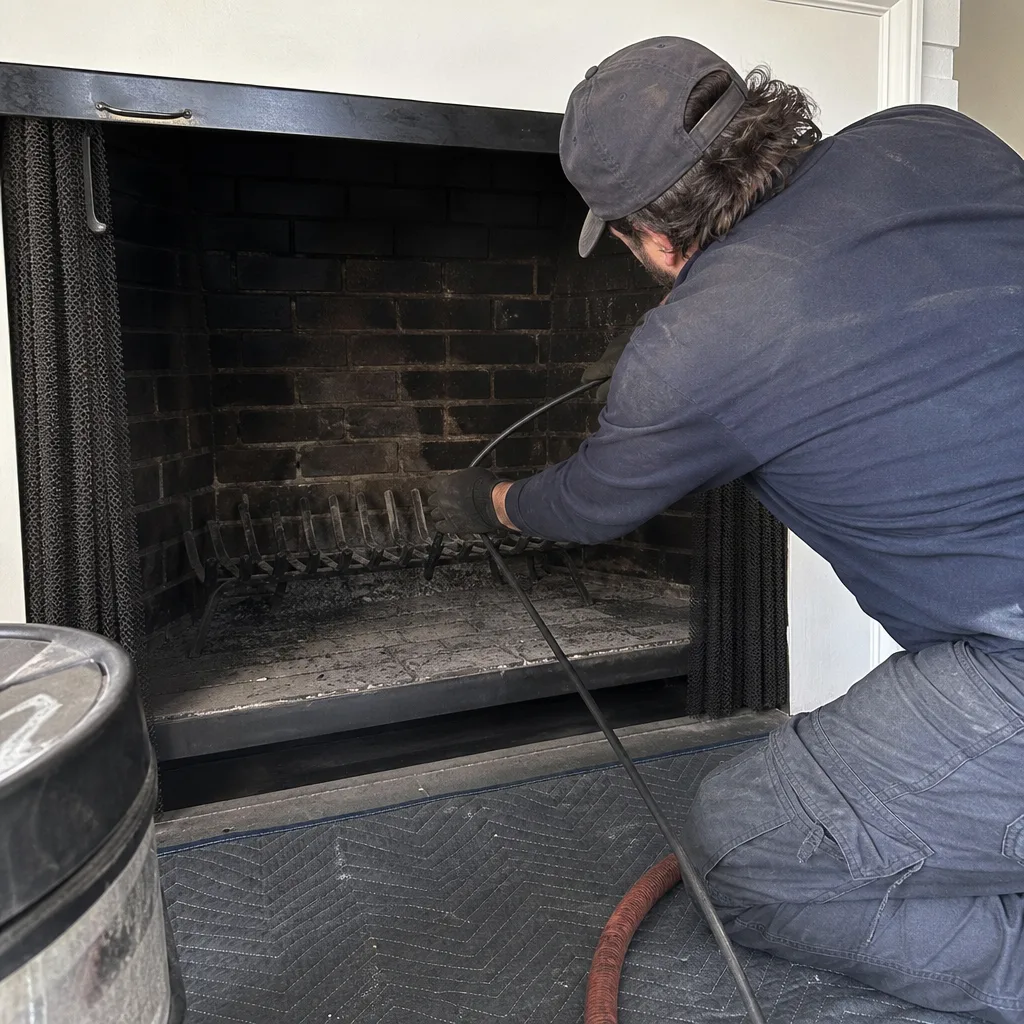 After
AfterThe Complete Guide to Chimney Cleaning in Evanston
A flashlight angled down a flue from the firebox opening can miss a Stage 3 glaze deposit sitting 14 feet up the liner - the kind that, in an insurance claim, gets called “pre-existing and uninspected.” In Evanston, where pre-war masonry chimneys, converted gas inserts, and multi-flue greystones make up the bulk of our housing stock, that gap isn’t theoretical. We’ve found cracked flue liners hidden behind intact firebrick in homes near Northwestern’s campus, and we’ve seen gas-converted fireplaces in the Historic District with original clay liners still in place after 90 years of thermal cycling. This guide separates chimney cleaning into its three actual jobs - sweeping, inspection, and documentation - shows what each costs in Evanston’s market, and teaches you to read a sweep’s invoice so you know which ones you received. For year-round seasonal chimney care guidance, see our dedicated Evanston homeowner’s guide.
Quick Answer
Chimney cleaning in Evanston typically costs $199-$349 for a complete service that includes sweeping, NFPA 211 Level 2 camera inspection, and written documentation with photos. A sweep-only visit without inspection runs $149-$219, but leaves you without the documented record insurers and Evanston’s building department increasingly expect. Most Evanston homeowners need this done annually if burning wood regularly, or every 2-3 years for gas or decorative fireplaces.
Table of Contents
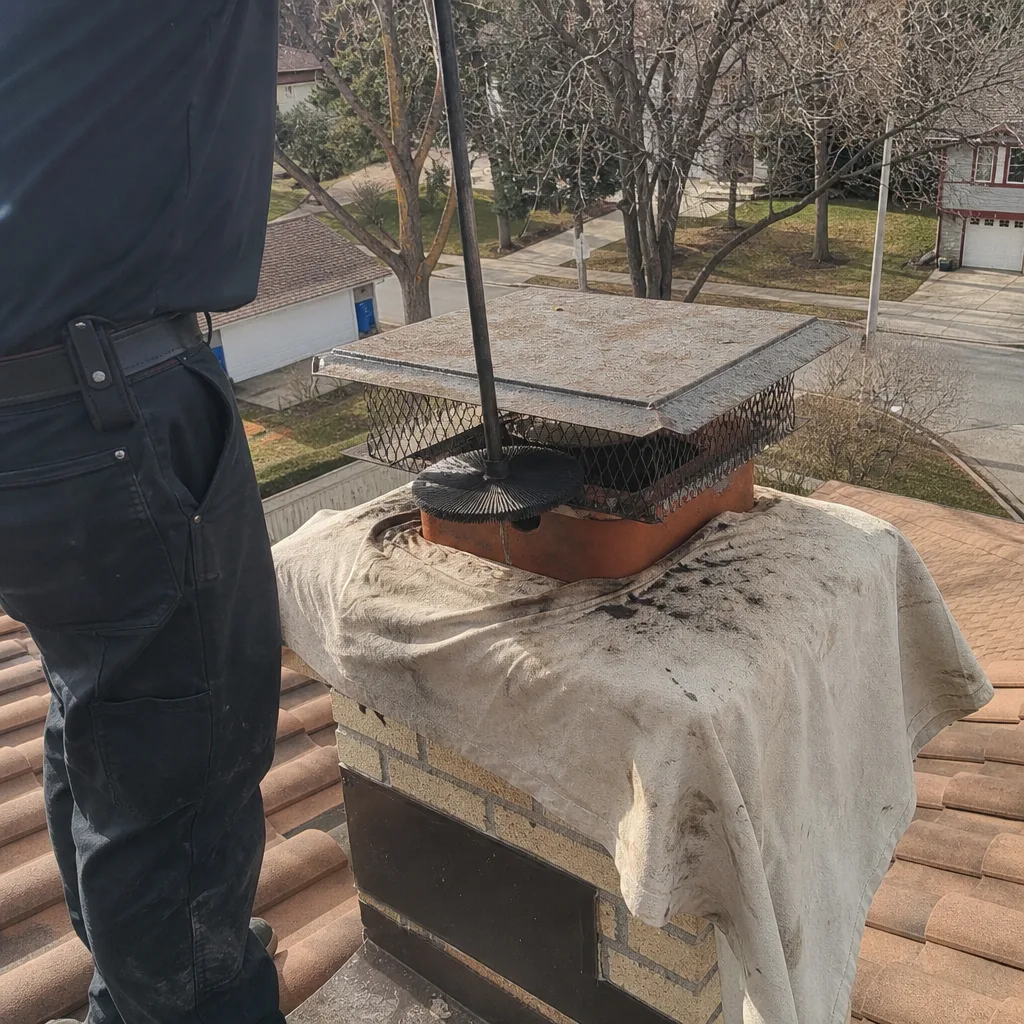
- The Three-Part Job: Sweeping, Inspection, and Documentation
- Evanston Chimney Types and What They Need
- What a Camera Scan Finds That a Visual Inspection Misses
- The Written Record: What Insurers and Evanston Code Require
- How to Read a Chimney Sweep Invoice
- Chimney Cleaning Costs in Evanston (2026)
- Common Mistakes to Avoid
- When to Call a Professional
- Frequently Asked Questions
- The Bottom Line
BeforeAfterThe Three-Part Job: Sweeping, Inspection, and Documentation
Most Evanston homeowners ask for “a chimney cleaning” and expect one service. In reality, they’re requesting three distinct jobs that three different companies might deliver as one, two, or - in the worst cases - zero complete services. Understanding the separation protects you from paying for what you didn’t get.
Sweeping is mechanical removal of combustible deposits. A technician runs brushes, whips, or poly chains through the flue to dislodge soot, creosote, and debris. The work is finished when the flue surface reads clean to the touch at reachable points. Sweeping does not include looking for cracks, measuring liner thickness, or photographing conditions. It’s a maintenance task, like changing oil in a car.
Inspection is evaluation of system condition against NFPA 211 standards. A Level 1 inspection checks readily accessible portions from the firebox and roof. A Level 2 inspection, which we perform on every Evanston visit, uses a camera scanned the full length of the flue to document liner condition, joint alignment, mortar degradation, and obstruction. The camera doesn’t lie about a crack it can see, and it sees what eyes cannot at 14 feet up a narrow clay liner.
Documentation is the written and photographic record of what was found, what was done, and what was recommended. This includes the sweep invoice, inspection report, annotated camera footage, and written scope with pricing for any recommended repairs. Without documentation, you have no proof the work occurred, no baseline for future comparison, and no defense if an insurance adjuster questions whether a condition was “pre-existing.”
At Emberly Chimney Cleaners Evanston, we don’t separate these into optional tiers. Every visit includes all three, quoted in writing before we start, because Clause 1 of the Haven Standard requires a written price, scope, and warranty before any work begins. We’ve operated this way since 2009, and our archive of documented visits now exceeds 38,000 chimney records.
Evanston Chimney Types and What They Need
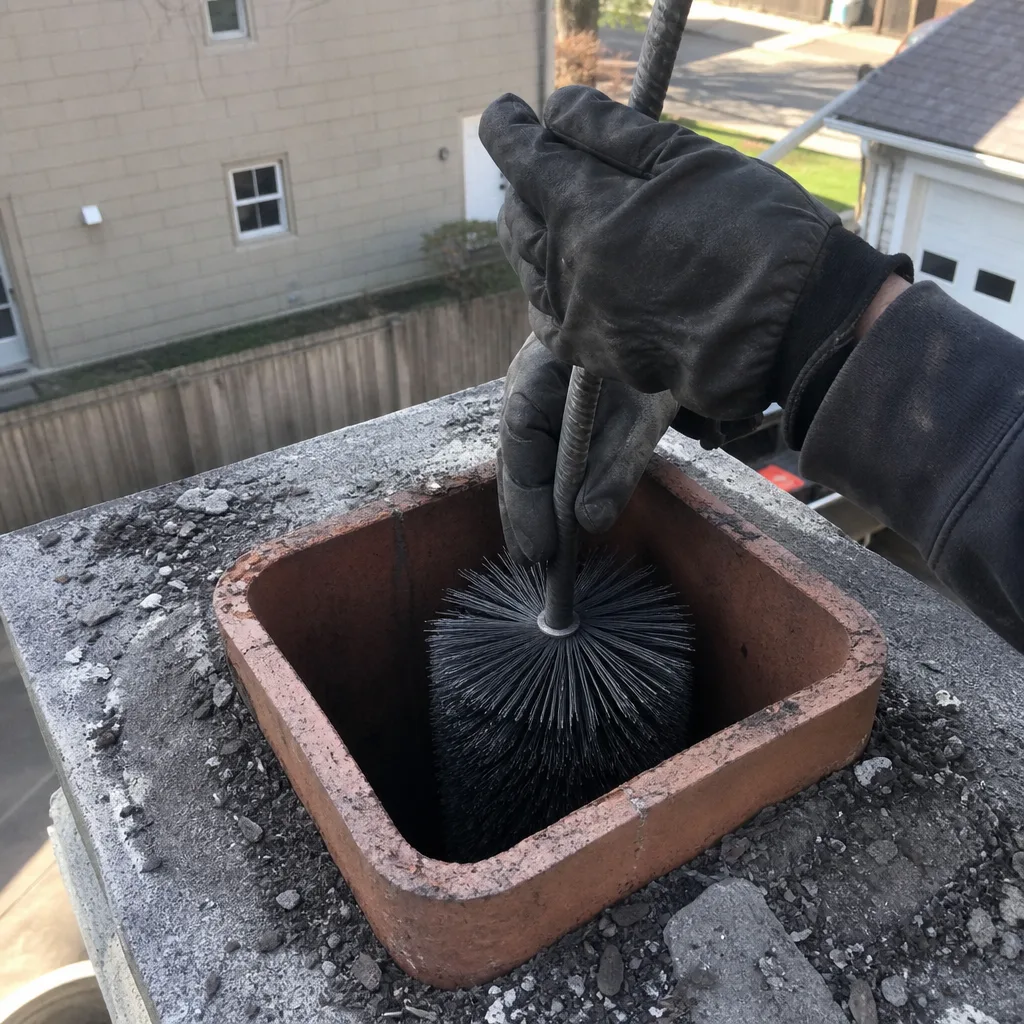
Evanston’s building stock breaks into three chimney profiles, each with distinct cleaning intervals, failure modes, and cost drivers. Knowing which profile matches your home prevents both over-maintenance and dangerous neglect.
Pre-War Masonry Chimneys (Pre-1945)
Found throughout Evanston’s Historic District, the Lakeshore area, and neighborhoods west of Ridge Avenue, these are typically unlined or clay-lined brick structures with original mortar. The freeze-thaw cycle along Lake Michigan accelerates spalling - the flaking of brick faces caused by water trapped in masonry pores. We’ve replaced crowns on homes near Lighthouse Beach where winter wind drove water so deep into the brick that freeze damage appeared in under five years.
Cleaning interval: Annually if burning wood; every 2 years if gas-converted but still venting through original flue. These chimneys especially need camera inspection because clay liners in this era were often single wythe (one brick thick) and crack from thermal shock after decades of use.
Gas-Converted Fireplaces (1970s-2000s)
Common in Ranch Triangle, Dewey, and sections of West Evanston where original wood-burning fireplaces were retrofit with gas logs or inserts. The conversion often left original clay liners in place, now subjected to different thermal patterns - gas burns cooler and wetter than wood, producing acidic condensation that deteriorates mortar joints from the inside.
Cleaning interval: Every 2-3 years for inspection, though “cleaning” is lighter since gas produces minimal creosote. The critical task is camera verification that the liner still handles gas exhaust safely. We’ve found deteriorated clay liners in gas-converted Evanston fireplaces where the homeowner assumed no maintenance was needed because “it’s just gas.”
Multi-Flue Greystones and Multi-Units (1900s-1930s)
The greystone buildings along Sheridan Road and in pockets near downtown Evanston often contain multiple flues serving separate units or fireplaces. These shared structures create complex draft patterns and cross-contamination risks. One tenant’s water heater may vent into a flue shared with another unit’s fireplace, or a deteriorated partition between flues can allow exhaust migration.
Cleaning interval: Annually for any actively used flue; camera inspection of all flues in the structure every 2-3 years regardless of use, because deterioration in one flue can compromise adjacent units. Multi-flue inspections take longer and cost more, but skipping them has led to carbon monoxide incidents we’ve been called to investigate in Evanston rental properties.
What a Camera Scan Finds That a Visual Inspection Misses
The difference between a visual inspection and a camera scan isn’t incremental - it’s categorical. We’ve documented the gap in thousands of Evanston chimneys, and the pattern is consistent: what eyes can’t reach, they can’t judge.
A visual inspection from the firebox sees the first 2-3 feet of flue, the damper condition, and the smoke chamber walls if the inspector uses a strong light and angles properly. From the roof, a visual inspection sees the crown, cap, flue opening, and perhaps the top few feet of liner if the chimney is straight and the day is bright. What it cannot see: the mid-flue crack that opens when the liner heats and expands; the shifted clay liner joint that creates a gap for creosote accumulation; the mortar void behind a seemingly intact surface; the bird nest or collapsed liner section 12 feet down.
Our camera system, deployed on every Evanston chimney cleaning, records 1080p footage as it traverses the full flue length. The technician annotates timestamps for any condition of note. The homeowner receives this footage, not a verbal summary. Here’s what the camera found in three recent Evanston jobs that visual inspection missed:
- Near Central Street: A hairline crack in a clay liner, invisible from top or bottom, that opened to 3mm after three heating seasons of thermal cycling. Visual inspection rated the liner “sound.” Camera scan recommended replacement. The homeowner’s insurer later required the camera documentation for continued coverage.
- Historic District greystone: A displaced liner joint 9 feet down, creating a 1-inch gap where creosote had accumulated to Class III glaze thickness. The firebox view showed only clean walls. The camera found a chimney fire waiting to happen.
- Lakeshore area conversion: A gas insert installed without proper liner connection, venting exhaust into the original clay flue with no stainless steel liner. Visual inspection from the top showed “a liner.” Camera scan showed the liner stopped 4 feet short of the insert connection.
Clause 4 of the Haven Standard requires this photo record on every job. We implemented it in 2009, before insurers or regulators asked, because the documentation gap was obvious. A verbal “looks good” from a technician who spent four minutes with a flashlight doesn’t protect you in a claim dispute. Timestamped camera footage does.
The Written Record: What Insurers and Evanston Code Require
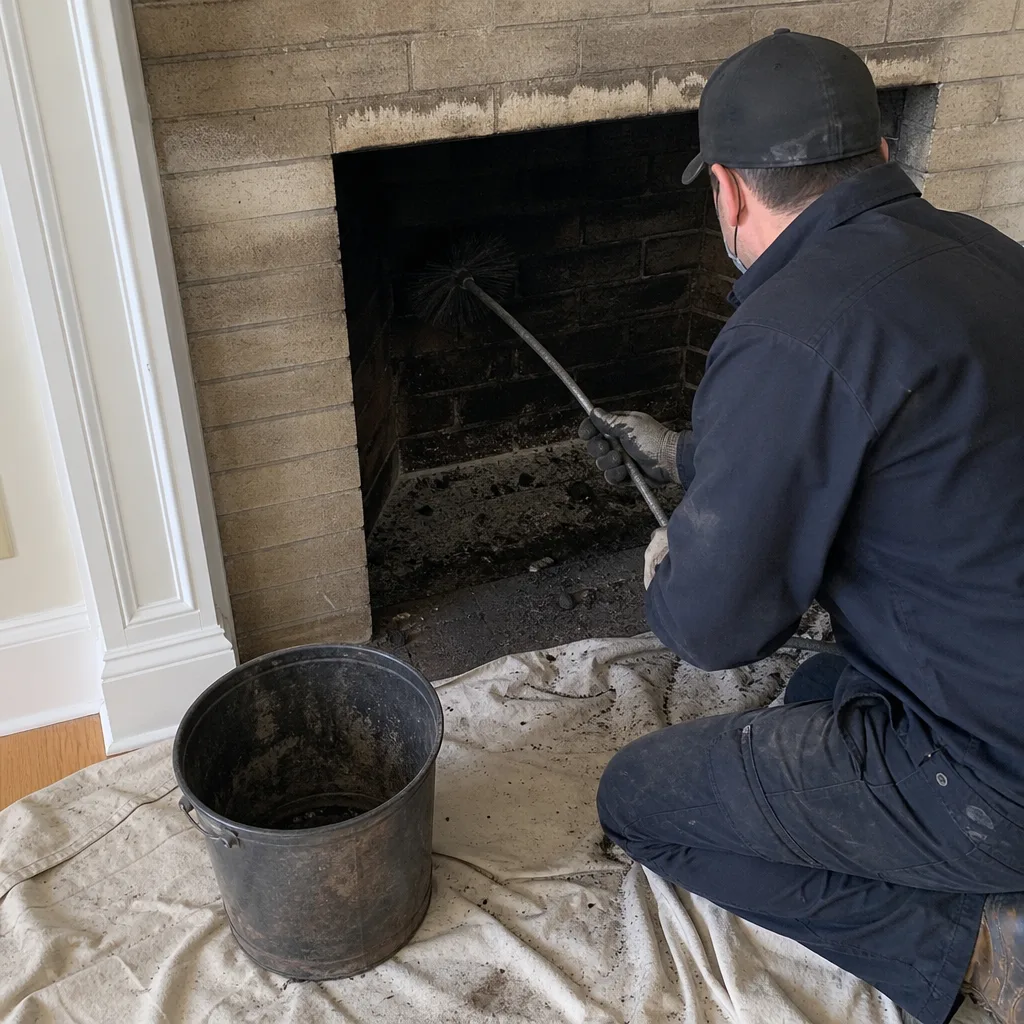
The written record from a chimney service isn’t paperwork - it’s evidence. And the standards for what constitutes adequate documentation have tightened significantly in the past decade, particularly for Evanston homeowners filing claims or selling property.
Most homeowner insurance policies now contain language requiring “documented maintenance” for wood-burning systems. The interpretation varies by carrier, but the trend is clear: a handwritten receipt for “$199 sweep” no longer satisfies adjusters investigating chimney fire claims. They want dated photos, inspection reports referencing applicable standards (NFPA 211), and written scope for any recommended repairs with technician credentials.
Evanston’s municipal code, administered through the Building & Inspection Services Division, doesn’t mandate private chimney inspection frequency for single-family homes. However, rental properties and multi-unit buildings fall under more stringent requirements, and the city’s fire prevention bureau has increasingly referenced NFPA 211 standards in post-incident investigations. In practical terms, an Evanston landlord without documented annual chimney maintenance faces stronger liability exposure after any fire or CO incident involving the heating system.
What the written record should contain:
- Pre-work documentation: Written price, scope of work, and warranty terms signed before technician begins (Haven Standard Clause 1).
- Inspection report: NFPA 211 level performed, system components evaluated, conditions found with severity ratings.
- Photo/video record: Annotated camera footage of flue interior, accessible exterior conditions, and any defects (Haven Standard Clause 4).
- Post-work documentation: Completed scope confirmation, any deviations from original estimate with homeowner approval, and final invoice matching pre-work price.
- Repair recommendations: Written scope with pricing for any needed work, prioritized by safety urgency, with explicit statement if work can safely wait.
We provide all five elements on every Evanston visit. Our documentation archive, searchable by address, lets returning homeowners compare current conditions to previous visits - a capability that’s resolved multiple insurance disputes when adjusters questioned whether a crack was “new” or “pre-existing.”
How to Read a Chimney Sweep Invoice
The invoice you receive after a chimney service tells you, in itemized form, what was actually purchased. Most Evanston homeowners file it without reading closely. That’s a mistake, because the invoice reveals whether you received a complete three-part service or a partial one billed at full price.
Here’s how to read the line items:
| Invoice Line | What It Means | What to Verify |
|---|---|---|
| “Chimney sweep” or “Chimney cleaning” | Mechanical removal of deposits from flue | Was brushing equipment actually used? Soot volume should match your burning habits. |
| “Level 1 inspection” | Visual check of accessible portions only | No camera. No roof work. Appropriate only for unchanged systems with recent Level 2. |
| “Level 2 inspection” | Camera scan of full flue length, accessible exterior, attic, and basement connections | Demand the footage. If no video file or annotated stills were provided, you didn’t get Level 2. |
| “Photo documentation” | Still images of conditions found | Should be dated, address-identified, and referenced in inspection report. |
| “Written estimate for repairs” | Scope and pricing for recommended work | Must be itemized, not lump-sum. Should distinguish safety-required from optional improvements. |
| “Warranty” | Guarantee terms for work performed | Duration, coverage limits, and claim process should be specified. Vague “satisfaction guaranteed” language is insufficient. |
Red flags on an Evanston chimney invoice: a single line item like “chimney service - $299” with no breakdown; “inspection” without specification of Level 1 or 2; any repair recommendation without photo evidence; pricing delivered verbally or after work began; no warranty terms in writing. Our step-by-step guide to hiring a chimney contractor in Evanston covers additional vetting steps before you commit.
At Emberly Chimney Cleaners Evanston, our invoices match our pre-work quotes exactly unless we find a condition that changes scope, in which case we stop, explain, and obtain written approval before continuing. Haven Standard Clause 1 doesn’t permit surprise charges.
Chimney Cleaning Costs in Evanston (2026)
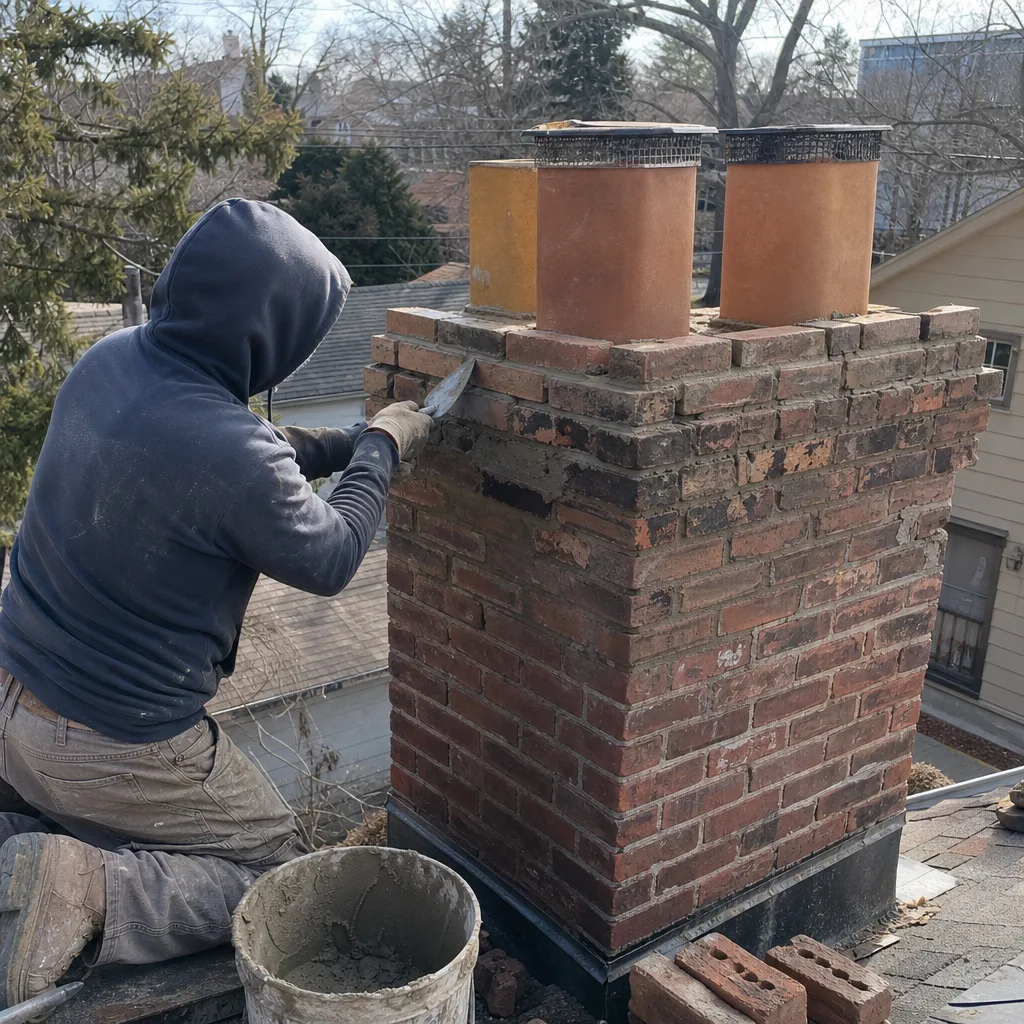
Evanston’s chimney service pricing reflects Chicago-area labor costs, Lake County permit structures for any repair work, and the complexity of the housing stock. Below are actual 2026 price ranges for services we perform, with the caveat that final pricing requires on-site evaluation because chimney condition varies more than most homeowners expect.
| Service | Price Range | What’s Included |
|---|---|---|
| Sweep only (no inspection) | $149-$219 | Mechanical cleaning of flue, debris removal, basic firebox check |
| Level 2 inspection only (no sweep needed) | $179-$249 | Camera scan, exterior evaluation, written report with photos |
| Complete service: sweep + Level 2 inspection + documentation | $199-$349 | Full cleaning, camera scan, annotated footage, written report, repair recommendations if needed |
| Multi-flue property (per additional flue) | $89-$149 | Additional sweep and camera inspection with separate documentation |
| Class III creosote removal (glaze deposit) | $349-$549 | Chemical treatment and mechanical removal of hardened deposits; requires follow-up inspection |
Factors that increase Evanston pricing: steep roof pitch requiring additional safety equipment; active bird or animal removal before cleaning; heavily degraded systems requiring protective measures during sweep; after-hours emergency calls. We quote these factors in writing before scheduling, not upon arrival.
Materials for any repair work - liners from DuraFlex or Olympia Chimney, refractory repair with HeatShield, caps and crowns from Gelco or Famco - are sourced through Haven’s buying network to maintain price honesty. We don’t markup materials arbitrarily; our written scope specifies manufacturer, model, and installed price.
The Free Second Opinion on any written estimate applies here. Bring us a competitor’s written quote for chimney repair in Evanston and we’ll evaluate it against what we find, with no obligation.
Common Mistakes to Avoid
- Hiring based on lowest price without verifying what’s included. A $99 “chimney special” in Evanston typically covers a 15-minute visual look and a shop-vac run. It doesn’t include camera inspection, documentation, or meaningful evaluation of system safety.
- Assuming gas fireplaces need no maintenance. Gas produces acidic condensation that deteriorates liners from inside. We’ve replaced liners in Evanston gas fireplaces where the homeowner skipped ten years of inspection because “it’s cleaner than wood.”
- Accepting verbal recommendations without photo evidence. If a technician says you need a new liner but can’t show you the crack or deterioration, the recommendation is unverified. Every significant finding in our process is photographed and explained.
- Ignoring the smoke chamber. The area above the damper and below the flue is often the most deteriorated part of pre-war Evanston chimneys, and it’s invisible in a basic firebox look. Camera inspection from below, or visual from above during Level 2, is required.
- Scheduling only after visible problems appear. Water staining on interior walls, mortar crumbs in the firebox, or draft issues are late symptoms. Annual inspection catches conditions before they announce themselves through property damage.
- Not keeping documentation between service providers. When you switch chimney companies, the new provider has no baseline without your previous records. Our documented archive follows the address, but if you’ve used other services, request their reports before we arrive.
- DIY cleaning without understanding system condition. Homeowner brush kits can damage deteriorated liners or miss obstructions. More critically, without camera inspection you have no knowledge of what the flue actually contains. We don’t recommend DIY for Evanston’s aging housing stock.
When to Call a Professional
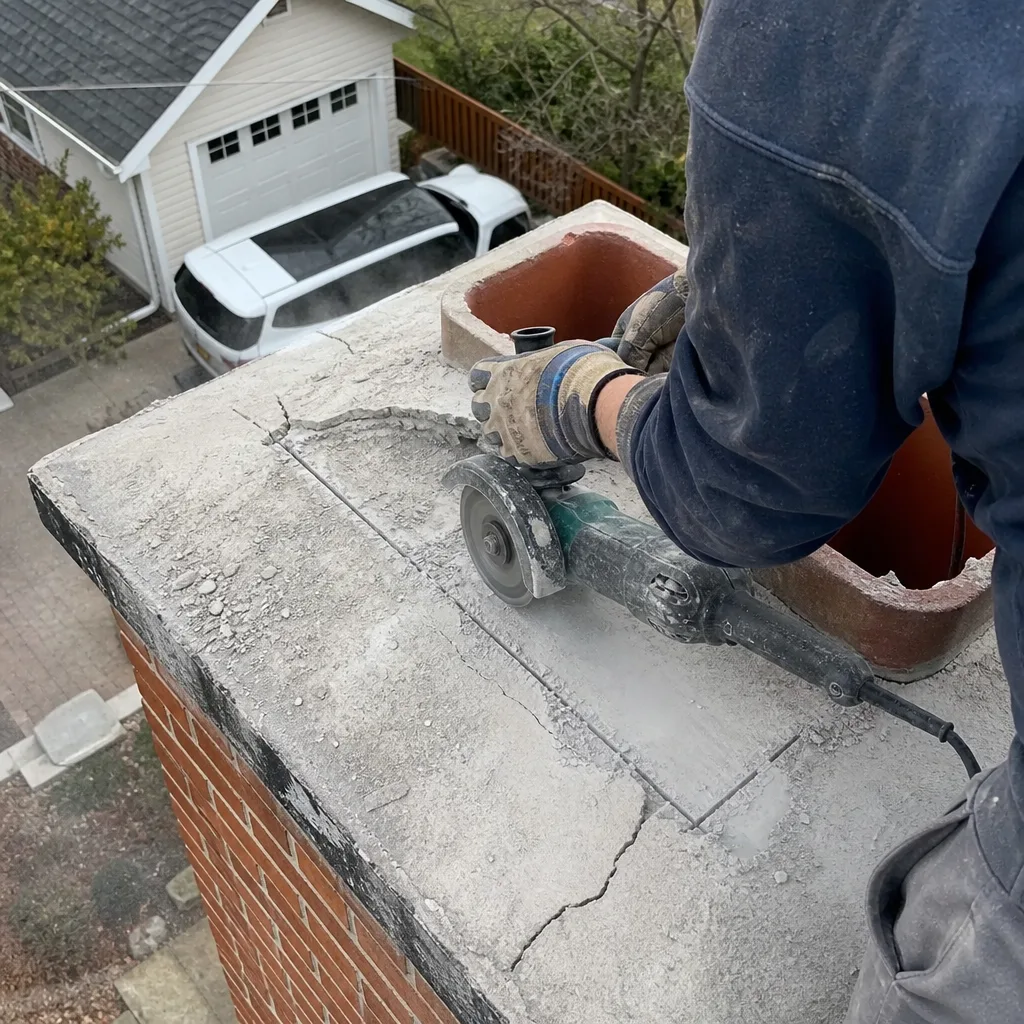
Call for service before burning season begins, ideally late summer or early fall, when scheduling is available and any needed repairs can be completed before first use. In Evanston, our calendar fills by October for pre-winter appointments.
Call immediately if you notice: visible cracks in the firebox or exterior masonry; water stains on walls or ceiling near the chimney; draft problems or smoke entering the room; unusual odors from the fireplace when not in use; or any chimney fire indicator (loud cracking, dense smoke, intense odor). These are not maintenance items - they’re safety concerns.
For routine service, Emberly Chimney Cleaners Evanston offers free estimates throughout Evanston. We’ll provide a written price before any work begins, perform camera inspection and documentation on every visit, and back our work with the 365-Day Done Right Promise. Call (708) 234-1174 to schedule.
Frequently Asked Questions
A complete chimney sweep with Level 2 camera inspection and written documentation costs $199-$349 in Evanston for 2026. Sweep-only service without inspection runs $149-$219, and inspection-only visits for systems that don’t need cleaning are $179-$249. Call (708) 234-1174 for an exact quote - estimates are free.
Wood-burning chimneys in Evanston should be swept annually, especially given the heavy heating demand from Lake Michigan winters and the age of much local housing stock. Gas fireplaces need inspection every 2-3 years, though they produce minimal creosote. Homes with pre-war masonry or converted systems may need more frequent evaluation due to liner deterioration rates we’ve observed in Evanston’s climate.
You should never accept a liner replacement recommendation without seeing dated photo or video evidence of the specific damage. At Emberly Chimney Cleaners Evanston, we show you the crack, the spalling, or the gap before recommending replacement, and we explicitly state when a condition can be monitored rather than repaired immediately. Our Free Second Opinion service will evaluate any competitor’s written liner quote against our findings.
Skipped maintenance allows creosote accumulation, which narrows the flue and increases fire risk. In Evanston’s older masonry chimneys, it also means missing liner deterioration that can allow heat transfer to combustible framing or carbon monoxide leakage into living spaces. The most expensive chimney service is the one you didn’t scheduled - emergency response after a fire or CO incident costs thousands and may not be fully covered if documentation gaps exist.
Level 1 is a visual check of accessible portions without tools or camera, appropriate only for unchanged systems with recent documented inspection. Level 2 requires camera scan of the full flue length, evaluation of accessible attics and basements, and written documentation - it’s the standard we apply to every Evanston visit because it finds what visual inspection cannot.
Evanston’s municipal code doesn’t mandate chimney inspection as a condition of sale, but home insurers increasingly require documented Level 2 inspection for wood-burning systems, and buyers’ inspectors frequently flag uncertified chimneys as deficiencies. A documented inspection report from Emberly Chimney Cleaners Evanston, with annotated camera footage, satisfies virtually all insurer and buyer requirements we’ve encountered in the local market.
The Bottom Line
Chimney cleaning in Evanston is three jobs, not one: mechanical sweeping, camera-based inspection, and written documentation with photo evidence. Conflating them serves companies that want to charge for two while delivering one. Understanding the separation lets you read any invoice critically, verify any recommendation against evidence, and maintain the documented record that insurers and prudent homeownership require. Browse our more guides & resources for additional homeowner maintenance advice. For pre-war masonry, gas conversions, and multi-flue greystones - Evanston’s dominant housing types - the camera scan isn’t optional equipment; it’s the only way to see what actually matters in your flue.
Emberly Chimney Cleaners Evanston has performed these three-part services on more than 38,000 chimneys since 2009, every one with written price before work, documented photo record on completion, and the 365-Day Done Right Promise. If your chimney hasn’t had a Level 2 inspection in the past year, or if you’ve never received camera footage and a written report from your sweep, you’re missing information you need.
Call (708) 234-1174 for a free estimate. We’ll quote your service in writing before we schedule, arrive with background-checked uniformed technicians, and leave you with documentation that answers questions before they’re asked.
Written by Corrine Halstead, Owner at Emberly Chimney Cleaners Evanston, serving Evanston since 2009.